If you’ve ever stood in front of your closet wondering why a suit that cost real money still doesn’t sit right on your shoulders, you are not alone. Every week, men across Kansas City ask us some version of the same question: is it time to move from ready-to-wear to custom clothing?
There’s no universal right answer. A construction executive heading to a job site doesn’t have the same wardrobe needs as an attorney arguing cases downtown or a groom planning a wedding. The best choice depends on your body, your budget, your timeline, and how often you actually need to look sharp.
This guide breaks down exactly how ready-to-wear, made-to-measure, and custom clothing differ: in fit, process, cost, and long-term value, so that you can make a decision that actually fits your life, not just your body.
We’ll also cover turnaround times, what actually happens at a fitting, and the specific fit problems like shoulder width, torso length, and athletic builds that off-the-rack sizing can’t solve.
What Does Ready-To-Wear Clothing Mean?
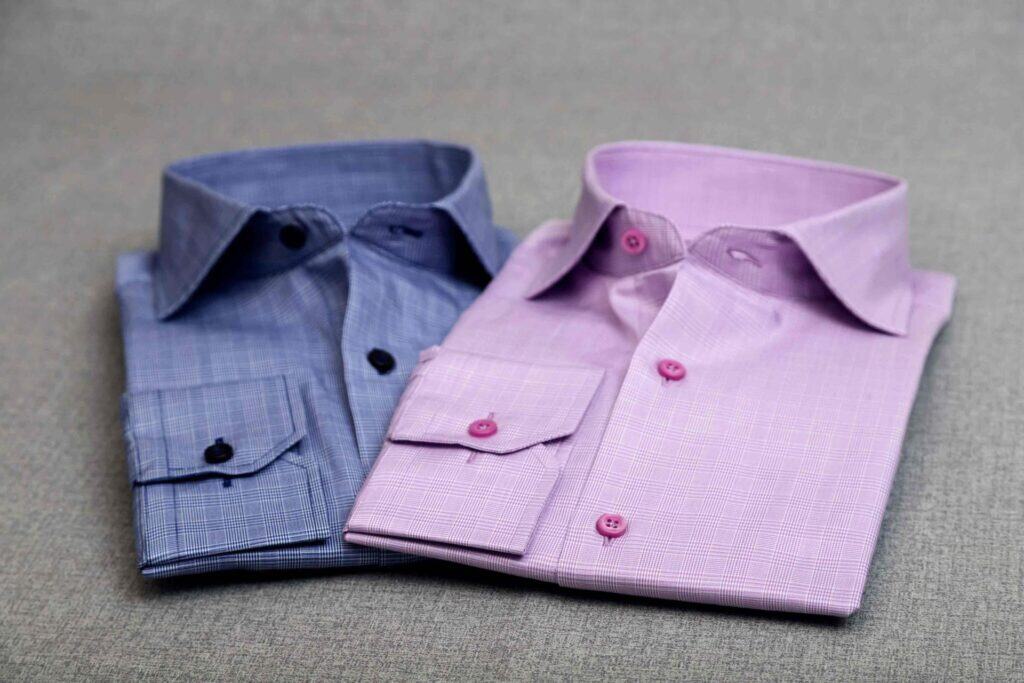
Ready-to-wear (sometimes called off-the-rack) is clothing manufactured in bulk to a standard set of size templates. A size 42R blazer is produced according to a brand’s predetermined sizing and pattern rather than being built around the individual wearer.
Manufacturers build these templates around statistical averages, which means proportions that fit a large percentage of the population reasonably well, but rarely fit anyone perfectly. That’s why you can try on ten different size 42R jackets from ten different brands and get ten different fits. The shoulders, sleeve length, and torso proportions are all locked in before you enter the store.
The upside of ready-to-wear clothing is that it’s fast to get, widely available, and generally the most budget-friendly entry point into a professional wardrobe.
Unless your body happens to match the manufacturer’s average proportions, you’ll likely need alterations for ready-to-wear garments. Some fit issues, like shoulder width, can’t be altered at all.
What Do Custom & Made-To-Measure Clothing Mean?

This is where things get confusing because the word custom gets used loosely in menswear. Let’s clear it up:
Made-To-Measure services start with an existing pattern block, similar to ready-to-wear, but that pattern is then adjusted based on your individual measurements and posture. It’s a hybrid approach: faster and more affordable than fully custom, but more personalized than anything off-the-rack.
(sometimes called bespoke) means a pattern is built from scratch for your body. There’s no starting template. Every dart, seam, and proportion is drafted around your actual measurements, posture, and the way you carry yourself. Our men’s custom suits page walks through exactly what this process looks like from start to finish.
These three words often get used interchangeably, which causes a lot of confusion for first-time buyers. Tailored technically just means altered, as a ready-to-wear jacket that’s been taken in at the waist is “tailored,” even though the underlying garment is still mass-produced.
Custom typically refers to made-to-measure or full bespoke work, where a garment is built or significantly adjusted specifically for you. Bespoke is the most rigorous term, traditionally reserved for garments cut from an individual pattern with no factory template involved at all, often requiring multiple in-person fittings.
For most Kansas City men, the practical decision isn’t bespoke versus tailored. It’s ready-to-wear versus made-to-measure versus full custom, and that’s where our expert team can help.
How Do Fit, Process, Selection & Turnaround Time Compare?

Ready-to-wear clothing fits an average body reasonably well and an atypical body poorly. Made-to-measure and custom clothing are built around your specific shoulder slope, arm length, torso length, and posture, which means details like sleeve pitch and jacket drape (things that alterations can’t fix) are addressed from the start.
With ready-to-wear, you’re selecting from what’s already on the rack. You try, you compare, you buy, and maybe you make some tailoring adjustments like hemming or taking in the waist.
With custom and made-to-measure, the process starts with a consultation and measurement session, followed by fabric and detail selection, then one or more fittings before the finished piece is delivered. It’s a longer and more intensive process, but you have more control and are involved in decisions ready-to-wear simply doesn’t offer.
Ready-to-wear selection is limited to whatever a brand has produced and stocked that season. Custom clothing opens up a much wider range of fabrics, cuts, and finishing details, because you’re not limited to what’s already hanging on a rack. You get to select every detail, from fabric weight to lapel width to lining color.
Ready-to-wear can go from fitting room to closet in the same day. Made-to-measure typically takes several weeks for production. Full custom, especially anything requiring multiple fittings, can take longer. If you need a suit for a wedding next weekend, this timeline matters as much as anything else on this list.
Custom Vs. Ready-To-Wear: What Do These Options Cost Over Time?

This is usually a deciding factor for many Kansas City men considering ready-to-wear vs. custom clothing. Ready-to-wear has a lower upfront price point, and for many men, that’s the right call, especially for pieces worn occasionally or for building out a wardrobe on a budget.
But ready-to-wear often comes with hidden costs: alteration fees, and in some cases, a jacket that never quite fits right, no matter how much a tailor takes it in. Made-to-measure and custom clothing cost more upfront, but the value proposition is different.
You’re paying for a garment built to your exact proportions from the start, in fabrics chosen for how you’ll actually wear them. Many of our clients tell us the real payoff isn’t obvious the first time they wear the suit. It shows up a year or two later, when they realize the suit fits exactly the way it did on day one, with no trips back to a tailor.
When Does Ready-To-Wear Clothing Make The Most Sense?

Custom clothing isn’t automatically the better choice for every man or every situation. Ready-to-wear makes strong sense when:
A same-week job interview or an unexpected funeral doesn’t leave room for a multi-week production timeline.
Some men genuinely fit well in off-the-rack with minor alterations, and paying a premium for custom work in that case doesn’t add much value.
Early-career professionals in Kansas City’s finance, legal, and healthcare sectors often start with quality ready-to-wear and transition to custom as their career (and their clothing budget) grows.
A costume, a one-off-themed event, or a garment you expect to outgrow doesn’t usually justify a custom investment.
When Is Custom Clothing Worth The Investment?

On the other hand, custom and made-to-measure clothing tend to pay off when:
If suits or sport coats are part of your weekly routine, not just for special occasions, then the fit, comfort, and durability differences that custom pieces provide compound over time.
Broader or narrower shoulders, a longer torso, a shorter or taller frame, or an athletic build relative to your waist size are common reasons Kansas City men come to us after years of frustrating alteration appointments.
Certain fabrics, colors, and details simply aren’t available in ready-to-wear inventory. For men who want something distinct for a wedding, a portrait, or a signature professional look, fully custom suits are a great option.
A wedding, milestone birthday, or a major career moment is often when men decide the investment is worth it. See our guide to wedding suits and groomswear for how we handle those timelines.
Body Type & Fit: How Should They Affect Your Custom Vs. Ready-To-Wear Decision?

Fit challenges are one of the most common reasons men move from ready-to-wear to custom in the first place. A few examples we see often:
Shoulder width is one of the few things a tailor genuinely cannot alter without essentially rebuilding the jacket. If ready-to-wear jackets always feel tight across the back or gap at the shoulder seam, custom is usually the more efficient long-term fix.
Standard sizing (short, regular, and long) accounts for height in broader strokes, but not for proportion. A man of average height with a longer torso and shorter legs often struggles with both categories. Custom clothing addresses torso and sleeve length independently.
A muscular chest and back paired with a comparatively narrow waist is a common fit challenge for ready-to-wear, since standard sizing assumes those measurements scale together. This is one of the most frequent reasons athletic-build clients in the KC area come in for a fitting.
There’s no wrong body type for custom clothing, but if your proportions already align closely with standard sizing, you may not need it as urgently as someone whose build sits outside the average.
How To Approach Business Wear, Weddings, & Formal Events

For everyday business attire, custom or made-to-measure clothing for professionals is usually the best call, especially in Kansas City’s corporate corridors.
You’re wearing these pieces multiple days a week, and fit issues that seem minor in a single outfit become noticeable and uncomfortable after hundreds of wears. Quality ready-to-wear can work here, but it’s the category where the cost-per-wear math tips towards custom faster.
There’s no single right answer for weddings. It depends on your budget and how far out you’re planning. As a general guideline, choose custom for the groom, since it’s a piece he’ll likely wear again, and the fit matters most in photos.
You can lean on ready-to-wear for the broader groomsman party, where coordinating across different budgets and body types on a timeline usually matters more than a perfect individual fit. If budget allows, and you’re planning far enough ahead, outfitting the entire party in complementary made-to-measure pieces gives the most cohesive look.
For occasional formal events, like galas, holiday parties, and award dinners, quality ready-to-wear garments are usually the smarter choice, especially if it’s a style you won’t repeat often.
But if black tie events are a recurring part of your calendar, switch to custom formalwear. Custom black tie event attire becomes a long-term wardrobe asset you’ll wear for years, rather than a one-time expense you re-pay every time.
What Are The Most Common Misconceptions About Custom Clothing?
Made-to-measure has become more accessible than traditional bespoke, and many Kansas City professionals incorporate it into a normal clothing budget rather than treating it as a luxury purchase.
Not true. Quality ready-to-wear, properly altered by a skilled tailor, can look excellent. The gap between ready-to-wear and custom is more about precision of fit than visible quality.
Full bespoke can take a while, but made-to-measure timelines are often more reasonable than people expect; comparable to ordering a piece of furniture, not building a house.
Plenty of men mix both, choosing custom pieces for their most-worn garments and ready-to-wear for everything else. It’s not an all-or-nothing decision.
Frequently Asked Questions About Custom Vs. Ready-To-Wear Clothing For Men In Kansas City
Usually not from a pure cost standpoint. If you’re an occasional wearer, quality ready-to-wear with professional alterations typically delivers better value.
It varies by fabric and detail level, but made-to-measure generally starts at a meaningful premium over mid-range ready-to-wear. The gap narrows when you factor in alteration costs and the extended lifespan of a well-built custom garment.
Alterations can improve waist suppression, sleeve length, and trouser fit, but they can’t change shoulder width or fundamentally alter the jacket’s structural proportions. If those are your issues, custom will outperform alterations every time.
This depends on the program, but most made-to-measure processes involve an initial measurement session and final fitting, with additional fittings added for more complex requests.
No. Made-to-measure adjusts an existing pattern to your measurements, while bespoke builds a pattern from scratch, specifically for you. Made-to-measure is faster and more affordable. Bespoke is more precise and more involved.
Either can work well. Custom offers a more cohesive, tailored look across the group, but ready-to-wear can be more practical for coordinating across different budgets and body types on a tight timeline. If you have the time and budget, custom is the best choice for photos.
Let’s Find The Right Fit For Your Kansas City Wardrobe

Whether you’re outfitting yourself for a promotion, a wedding, or simply tired of tailored garments that never quite sit right, the right choice comes down to your body, your budget, and how often you’ll actually wear the piece.
If you’re not sure where you land, that’s exactly what a fitting conversation is for. At Peters Clothiers, this is exactly what we do. We specialize in helping men in Kansas City navigate exactly this decision, between custom and ready-to-wear clothing.
It could mean a made-to-measure suit for the office, a full custom build for your wedding day, or expert guidance on which quality ready-to-wear pieces are worth your money. For help figuring out whether ready-to-wear or custom clothing is the smartest next step for your wardrobe, please Contact Peters Clothiers Here Today!