A career doesn’t stay in one place, and neither should a wardrobe. What gets you hired isn’t what gets you promoted, and what works at 25 rarely works at 45. In Kansas City, where relationships matter and first impressions carry weight across various industries, from law and finance to healthcare, architecture, and beyond, dressing well isn’t vanity. It’s strategy.
At Peters Clothiers, we’ve spent decades helping Kansas City professionals build wardrobes that grow with them. We’ve outfitted recent graduates for their first job offer and helped seasoned executives refine a closet that’s served them for two decades.
What we’ve learned is simple: the suit that impressed a client in your thirties may not be the one that commands a room in your fifties. This guide walks through dressing for every stage of your career in Kansas City, from your first professional wardrobe to executive-level dressing with practical, honest advice from people who think about menswear for a living.
Building Your First Professional Wardrobe

Building your first professional wardrobe is less about owning a lot of clothes and more about owning the right ones. Early in a career, budgets are often tight, which makes every purchase matter more, not less.
A strong foundation of a professional wardrobe typically includes:
- One Versatile Suit In Navy Or Charcoal That Works For Interviews, First Days, & Client-Facing Situations
- Two To Three Dress Shirts In White & Light Blue That Pair With Everything
- A Quality Leather Belt & A Pair Of Dress Shoes That Match
- A Few Ties That Aren’t Trend-Dependent (Solid Colors Or Subtle Patterns Age Well)
- A Weather-Appropriate Outer Layer, Since Kansas City Winters Demand More Than A Suit Jacket Can Offer
The goal at this stage isn’t a large closet. It’s a small collection of pieces that can be mixed, matched, and repeated without anyone noticing. Our expert team can help you build the right foundation from the start that will age with you and your career.
You don’t need custom clothing to start a career, but you do need proper fit. An off-the-rack suit that’s been tailored to your shoulders, sleeve length, and trouser break will look much more expensive than an unaltered suit that costs just as much. This is the one piece of advice that we give newer professionals: spend your money on fit.
Making A Strong First Impression: Interview & First-Job Attire

The interview is where a professional wardrobe earns its keep. Hiring managers form impressions in seconds, and clothing that fits poorly or looks careless can undercut even a strong resume.
Kansas City’s business culture varies by industry. A law firm, bank, or financial services company generally expects a full suit for interviews, even if daily office attire is more relaxed. Tech companies, startups, and creative agencies may lean business casual.
When in doubt, it’s almost always safer to be slightly overdressed than underdressed. You can always remove a jacket, but you can’t manufacture what you didn’t bring. A few interview-specific guidelines for how to dress:
- Stick To Conservative Colors Like Navy Or Dark Gray
- Iron Your Shirt The Night Before, Not The Morning Of
- Choose Shoes That Are Polished, Not Just Clean
- Keep Accessories Minimal: A Simple Watch & Belt Are Enough
Navigating Business Casual For Daily Office Life

Once you’ve landed the job, the daily grind of dressing for the office begins. This is where a lot of professionals underinvest, treating everyday clothing as an afterthought compared to interview or event attire, but this is a mistake. You wear your everyday clothes far more often than anything else in your closet.
Business casual is one of the most misunderstood dress codes because it varies so much by company and industry. In most Kansas City offices, it generally includes: dress pants or chinos (tailored to fit properly), button-down shirts (with or without a tie depending on the office), and sport coats or blazers (for a polished but not formal look).
You don’t need five different outfits for five days. A well-built rotation of 3-4 trousers, 5-6 shirts, and 2-3 jackets can be combined into more than a dozen distinct looks. This is where investing in versatile, well-fitted separates pays off. Quality over quantity keeps both your closet and your budget under control.
Yes, no one is tracking your blazer rotation as closely as you think. What people do notice is fit, cleanliness, and whether your clothes look intentional rather than thrown together.
How To Level Up Your Wardrobe As Your Role Expands
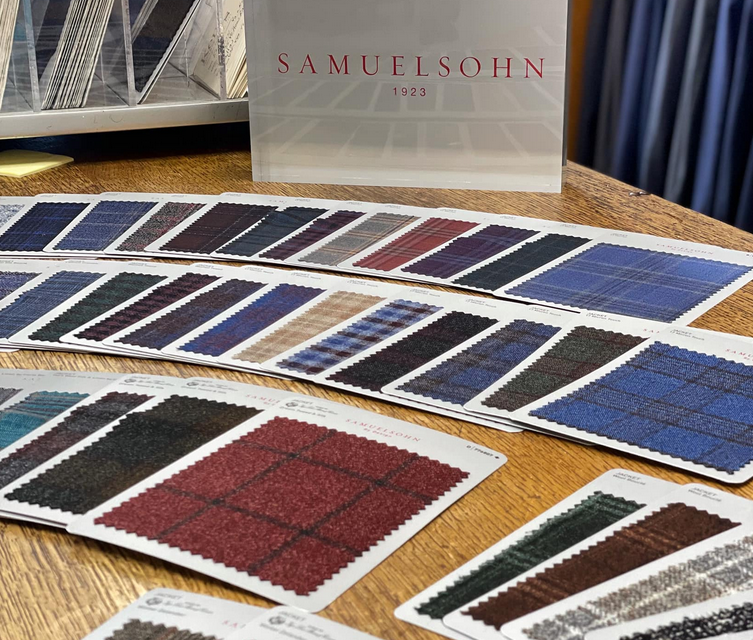
As your role grows, so does your visibility. You’re likely attending more meetings, representing your company more often, and being noticed by people outside your immediate team. This is the stage where many professionals start upgrading fabric quality, fit precision, and the overall polish of their wardrobe. Here are key things that should evolve as you take on more responsibility:
First, you can move from basic wool blends to higher-grade wools, or add a few pieces with a bit more structure and drape. These small upgrades hold their shape longer through a full day of meetings and read as more considered to the people around you.
This is often when professionals move past “does it fit” and start asking “does it fit well,” from shoulder seams that sit exactly right to sleeves that break at the perfect point.
As your calendar diversifies, a single go-to suit starts to feel limiting, and having a few distinct options on hand means scrambling to make one outfit stretch for every occasion. It’s wise to add pieces for a wider variety of situations, from client dinners to conference presentations.
If you’re at this stage, it’s worth having a conversation with an expert about where your current wardrobe is falling short. Our styling services are designed specifically for professionals who have outgrown their current options but aren’t yet sure of what the next level should look like.
What To Wear For Client Meetings, Networking, & Presentations

Client-facing work demands a different kind of dressing than internal office days. You’re not just representing yourself. You’re representing your company, and often making a case for why someone should trust you with their business.
For client meetings, err toward slightly more formal than your everyday attire. If your normal day is business casual, bring the meeting attire up a notch with a full suit or jacket and tie combination. This signals that you take the meeting and client seriously.
Kansas City has a strong professional networking culture, from industry mixers to other events. For evening events that follow a workday, a few adjustments work well:
- Swap a tie for an open collar if the event is more casual
- Keep a pocket square or accessory that adds personality without being distracting
- Make sure your suit or jacket travels well (no deep creases from sitting all day)
Presentations put you in front of a room, which raises the stakes on fit and polish. A well-tailored jacket reads better under fluorescent lighting than an ill-fitting one, and smart details, like a crisp collar or properly knotted tie, become more visible when standing at the front.
The Wardrobe Shift That Comes With Managing A Team
Moving into management changes how people perceive you, whether you intend it to or not. Direct reports, peers, and senior leadership are all watching for signals of authority and consistency.
The shift is less about formality and more about consistency and intention. Leaders tend to dress reliably well rather than occasionally well, as consistency reads as dependability. They also tend to choose fewer, higher-quality pieces over a large rotating wardrobe.
Not dramatically, but there’s often a subtle elevation: slightly better fabric, a more tailored fit, or fewer casual Fridays taken advantage of. The goal isn’t to create distance from your team; it’s to project the steadiness that leadership roles require.
Executive-Level Wardrobe Considerations — Wardrobe As Personal Brand

At the executive-level, wardrobe decisions become part of a broader personal brand. Executives are photographed for company materials, quoted in press, and often represent the company at a level where their appearance is genuinely part of the business’s public image.
Fit, fabric, and construction move to the forefront. This is typically where custom or made-to-measure clothing becomes worth the investment, since off-the-rack sizing rarely accounts for the small asymmetries every body has.
Executives also tend to build relationships with a single tailor or clothier who understands their preferences, body, and schedule, which is why so many of our longest-standing clients started as young professionals and grew into executive roles with us over the years.
For most executives, yes. Custom garments fit better, last longer, and often cost less per wear than a closet full of ill-fitting off-the-rack pieces replaced every couple of years. If you haven’t explored custom tailoring yet, executive transitions are one of the most common, and worthwhile, times to start.
Packing & Dressing Smart For Business Travel

Traveling for work introduces a different set of wardrobe demands: clothes need to pack well, wrinkle less, and adapt to multiple settings in a single trip.
Wool and wool-blend suits generally resist wrinkling better than cotton and linen. High-twist wool and performance fabrics are a smart choice, since they hold their shape through a full day of meetings and folded in a suitcase. If you travel often, a travel blazer is a great addition to your rotation.
Build around a core neutral suit (in navy or charcoal), and rotate shirts, ties, and accessories to create different looks.
Conferences tend to allow more casual flexibility, while client dinners typically call for a step up: a full suit or jacket at minimum. Packing one slightly dressier option for evening events, alongside your daytime rotation, covers both situations without doubling luggage.
Updating Your Wardrobe Over Time Through Every Career Stage
Wardrobes need maintenance, not just acquisition. Bodies change, fabrics wear, and styles that felt current a few years ago can start to look dated in ways that are hard to pinpoint but easy to notice.
A few signals worth paying attention to include:
- Jackets that pull across the shoulders or shirts that gap at the buttons
- Fabric that’s gone shiny at the elbows or seat (of your trousers) from repeated wear
- Ties, lapels, or trouser cuts that feel visibly out of step with current norms
- Simply not remembering the last time you bought anything new for work
For most working professionals in Kansas City, an annual check-in is enough. This includes trying on key pieces, assessing fit, and replacing anything that’s worn out or no longer serves the current role you’re in. During periods of major change, like a promotion, new job, or significant weight change, it’s worth doing this more often.
Common Wardrobe Mistakes That Undermine An Otherwise Sharp Look
Even well-intentioned professionals make wardrobe mistakes that undercut an otherwise strong appearance. Here are the mistakes we see most often in Kansas City offices:
Off-the-rack sizing is a starting point, not a finish line. Nearly every garment benefits from some tailoring.
A well-known label in the wrong size will always look worse than a lesser-known brand tailored correctly.
Scuffed or unpolished shoes undercut an otherwise sharp outfit faster than almost anything else.
Undershirts, socks, and dress shirts wear out faster than outerwear and often go unreplaced.
Wardrobe often lags behind ambition; dressing slightly ahead of your current role can support how others perceive your trajectory.
It’s rare, and it’s a far smaller risk than being underdressed. If your workplace trends casual, a well-fitted jacket without a tie usually finds the right middle ground.
Frequently Asked Career Wardrobe Questions
It depends on the industry. Law, finance, and client-facing roles still lean towards suits and sport coats, while tech, creative, and startup environments are more business casual. When you’re unsure, matching what leadership wears is usually a safer bet than matching your peers.
A few quick checks: the shoulder seam should sit right at the edge of your shoulder, the jacket should close without pulling, and your sleeve should end near your wrist bone.
Made-to-measure suits have an existing pattern adjusted to your measurements, while fully custom suits have a pattern created specifically for your body. Both offer a better fit at different price points, and our team can help you figure out which would be best for you.
There’s no fixed schedule, but most professionals find that staple pieces like suits and sport coats last several years with proper care, while shirts and everyday separates wear out faster and need replacing annually or so.
Lighter-weight wools, cotton-linen blends, and breathable dress shirts hold up better in Kansas City’s humidity than heavier fabrics. Even in summer, it’s worth keeping at least one lightweight jacket on hand for client meetings or air-conditioned offices.
Ready To Dress For What’s Next In Your Career?

Your wardrobe should move with you, from your first interview to your first leadership role to whatever comes after that. Peters Clothiers specializes in helping men find the right pieces, fitted correctly, for the stage of your career you’re actually in, or where you’re headed.
We help local professionals navigate every transition, one fitting at a time. Our team is ready to help you dress for every stage of your career in Kansas City. To schedule a wardrobe consultation, please Contact Us Here!